Post-Election Red States Capture Less Than 2% of 2026 U.S. Venture Funding
Crunchbase data shows red-governed states secured just $8.6 billion, under 2 % of total startup investment this year.
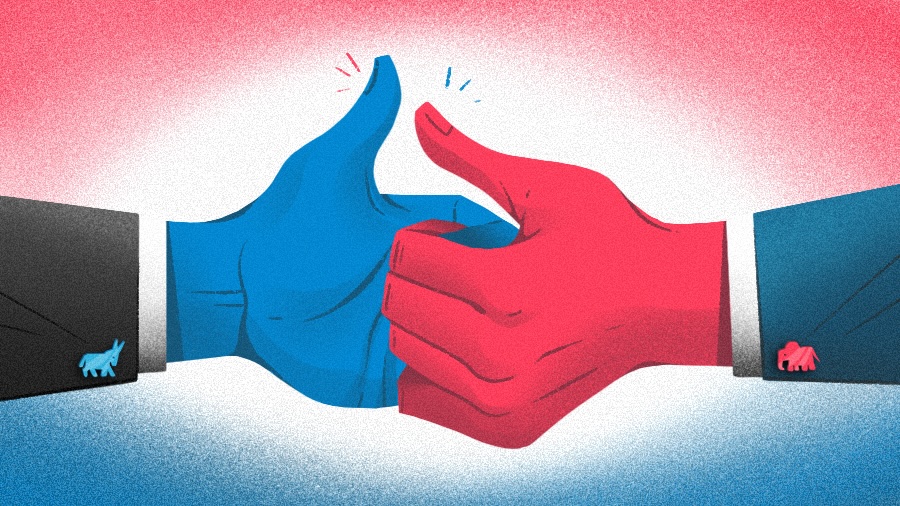
The latest Crunchbase analysis reveals that after the November 2026 elections, companies located in states with Republican control have received less than two percent of all venture capital flowing into U.S. startups this year. The finding underscores a widening geographic gap that now heavily favors Democratic-led states, especially California, and raises questions about where future capital will be deployed.
As of Election Day, the 17 red states, Alabama, Arkansas, Florida, Idaho, Indiana, Kentucky, Louisiana, Missouri, Montana, Nebraska, North Dakota, Oklahoma, South Dakota, Tennessee, Utah, West Virginia and Wyoming, have collectively raised $8.6 billion in venture funding. Those states house roughly a quarter of the nation’s population, yet their total is smaller than the typical weekly nationwide funding amount. By contrast, the ten purple states, Iowa, Kansas, New Hampshire, North Carolina, Ohio, Pennsylvania, South Carolina, Texas, Vermont and Wisconsin, have attracted about $28.6 billion, representing just over six percent of all U.S. startup money. Blue states dominate the landscape, pulling in $481 billion, a new record, with California alone accounting for more than three-quarters of that sum, driven largely by mega-rounds for OpenAI and Anthropic.
The analysis defines a “red state” as one that elected a Republican governor and two Republican U.S. senators, while a “purple state” has a mixed partisan composition across those offices, and a “blue state” features Democratic control of both the governorship and the Senate seats. Mississippi and Alaska were excluded because their Senate races were still undecided at the time of reporting.
The disparity is not solely a product of politics. Venture capital tends to cluster where deep technical talent, research universities, and established tech firms coexist, attributes that are most pronounced in urban centers like San Francisco and New York. Rural states, which tend to lean Republican, often lack the ecosystem that fuels large-scale funding rounds, especially in artificial intelligence. Nonetheless, exceptions exist; Austin has emerged as a significant hub despite Texas’s Republican leadership, and Utah maintains a sophisticated startup community.
While the bulk of capital is concentrated in big AI deals, the distribution of financing rounds tells a slightly different story. About 12 % of all deals valued at $1 million or more this year went to companies in purple states, and roughly 9 % landed in red states. This suggests that smaller-scale investments continue to flow to a broader set of regions, even as the headline numbers skew heavily toward blue-dominated markets.
Looking ahead, investors appear poised to keep targeting large, high-profile rounds in established blue-state hubs, but the modest share of $1 million-plus deals in red and purple states indicates that opportunities for growth-stage companies outside the coastal corridor remain. Whether the current political map will shift the balance of venture capital in the coming years, or whether emerging hubs like Austin and Utah can attract more mega-funding, remains an open question for founders and backers alike.